 Send Inquiry
 Send SMS
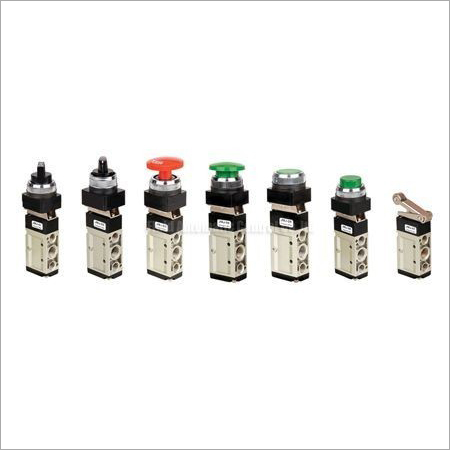
Mechanical Pneumatic Valve
550 INR/Piece
Product Details:
- Type Mechanical Pneumatic Valve
- Material Aluminum Alloy, Stainless Steel
- Power Manual/Mechanical Actuation
- Pressure 0.15~0.8 MPa
- Temperature -10C to 60C
- Voltage Not Required (Mechanical Operation)
- Thread Type BSP
- Click to view more
X
Mechanical Pneumatic Valve Price And Quantity
- 5 Piece
- 550 INR/Piece
Mechanical Pneumatic Valve Product Specifications
- Filtered Air
- 0.15~0.8 MPa
- Manual/Mechanical Actuation
- Mechanical Pneumatic Valve
- 1/4 inch
- Aluminum Alloy, Stainless Steel
- 0.15~0.8 MPa
- Not Required (Mechanical Operation)
- BSP
- Single
- -10C to 60C
- Manual Lever/Foot Pedal
- 320g (Approx.)
- Industrial Automation, Pneumatic Control Systems
- 2 or 3
- < 0.05 sec
- Yes
- NBR / EPDM
- 5 Way / 3 Position
- 5 Cycles/Sec
- Direct Exhaust
- Anodized
- Surface / Panel Mounting
Product Description
The primary function of a Mechanical Pneumatic Valve is to alter airflow. This valve can keep the pressure constant. Our valve comes in a wide variety of shapes and sizes, and there are several types of pneumatic valves. The style, type, design concept, type of operation, function, size, and application of Mechanical Pneumatic Valve is all classified. It may perform everything from basic on/off switching of a single flow route to precise proportional pressure and flow control.
Technical Specification
| Surface Finishing | Polished |
| Size | 1/4" |
| Material | Aluminum |
| Packaging Type | Box |
| Port Size | 1/8" & 1/4" |
| Pressure | Up to 10 Bar |
| Brand | SMC |
| Media | Air |
Manual and Reliable Actuation
This valve is manually actuated using either a lever or foot pedal, giving operators precise and immediate control without the need for electrical power. Its simple mechanical design reduces the potential for downtime, suitable for diverse industrial environments.
Versatile Configuration Options
Adaptable to various industrial settings, the valve operates in 2 or 3 positions with 5 ports, allowing flexible control options. Surface or panel mounting, along with single manifold type, ensures straightforward integration into existing systems.
Durability and Fast Response
Constructed from aluminum alloy and stainless steel, with anodized body finish, this valve is built to last in demanding environments. The fast response time of less than 0.05 seconds ensures efficient operation in high-frequency processes, up to 5 cycles per second.
FAQs of Mechanical Pneumatic Valve:
Q: How is the mechanical pneumatic valve actuated and what are the benefits of this operation mode?
A: The valve is actuated manually using a lever or foot pedal, eliminating the need for electrical power. This ensures increased reliability in power-independent operations and simplifies installation and maintenance in various industrial automation setups.Q: What applications is this valve suitable for?
A: It is ideal for industrial automation systems and pneumatic control networks where quick and precise mechanical control is essential. Typical applications include manufacturing assembly lines, material handling, and machinery requiring direct, manual pneumatic actuation.Q: When should I choose NBR vs EPDM seal material for this valve?
A: Choose NBR seals for general-purpose air handling where oil resistance is important. Opt for EPDM if the system requires higher chemical and temperature resistance (within the -10C to 60C operating range), especially suitable for certain industrial or environmental applications.Q: Where can this valve be installed within a pneumatic system?
A: The valve supports both surface and panel mounting, providing installation flexibility. It can be directly integrated into equipment panels or mounted on surfaces within pneumatic manifolds, suitable for both new and retrofit installations in industrial setups.Q: What is the process for integrating this valve into a pneumatic system?
A: Connect the 1/4 inch BSP ports to the air supply, actuator, and exhaust lines as per your circuit diagram. Secure the valve using surface or panel mountings. Manual actuation is then used to alternate valve positions, controlling air flow as required.Q: How does the direct exhaust type and spring return feature enhance valve performance?
A: The direct exhaust type quickly vents exhaust air, leading to faster actuator response times. The spring return mechanism ensures the valve automatically returns to its neutral position when released, enhancing operational safety and consistency.Tell us about your requirement

Price:
Quantity
Select Unit
- 50
- 100
- 200
- 250
- 500
- 1000+
Additional detail
Mobile number
Email

Other Products in 'Pneumatic valves' category


Contact Details
AGARWAL PNEUMATICS & HYDRAULIC PRODUCT
GST : 08AAYFA7328K1ZQ
GST : 08AAYFA7328K1ZQ
- S/C-20, First Floor, 32 Dukan Market, V.K.I. Area, Road No.-09,Jaipur - 302013, Rajasthan, India
- Phone :07971189377
-
 Send Inquiry
 Send Inquiry
- Mr Shubham Agarwal (Proprietor)
- Mobile :07971189377
 |
AGARWAL PNEUMATICS & HYDRAULIC PRODUCT
All Rights Reserved.(Terms of Use) Developed and Managed by Infocom Network Private Limited. |
